
You brush twice a day. You might even use mouthwash. But if you're skipping water flossing, you could be missing up to 40% of your tooth surfaces — the tight spaces between teeth and along the gumline where bacteria love to hide.
Water flossing (also called oral irrigation) is one of the most effective yet underused steps in a daily oral care routine. In this guide, we'll explore why it matters, how it compares to traditional flossing, and what to look for when choosing a water flosser in the UK.
What Is Water Flossing?
A water flosser uses a pressurised stream of water to flush out food particles, plaque, and bacteria from between your teeth and below the gumline. Unlike string floss, it reaches areas that are difficult to clean manually — making it especially useful for people with braces, bridges, implants, or sensitive gums.
Water Flossing vs Traditional Flossing: What's the Difference?
Both methods aim to clean between teeth, but they work quite differently:
- Traditional floss physically scrapes plaque from tooth surfaces. It's effective but can be fiddly, uncomfortable, and easy to skip.
- Water flossers use pulsating water pressure to dislodge debris and massage gum tissue. Studies suggest water flossers can be up to 51% more effective at reducing gingivitis than string floss.
The good news? You don't have to choose. Using both gives you the most thorough clean possible.
Key Benefits of Adding a Water Flosser to Your Routine
- ✅ Removes plaque and food debris from hard-to-reach areas
- ✅ Reduces gum inflammation and bleeding with regular use
- ✅ Gentle on sensitive gums — ideal for those who find string floss painful
- ✅ Great for orthodontic work — cleans around braces and implants with ease
- ✅ Freshens breath by flushing out bacteria that cause odour
What to Look for in a Water Flosser (UK Guide)
Not all water flossers are created equal. Here's what to consider when shopping:
- Water pressure: Look for at least 80–120 PSI for effective cleaning without discomfort.
- Pulse rate: Higher pulses per minute (1,000+) means more thorough cleaning action.
- Tank capacity: A larger tank means fewer refills mid-session.
- Portability: If you travel frequently, a compact, USB-C rechargeable model is ideal.
- Waterproof rating: IPX7 waterproofing means it's safe to use in the shower.
- Certifications: Look for CE, FCC, ROHS, PSE, and CB certifications for safety and quality assurance.
Meet the White Wizard Mini Water Flosser
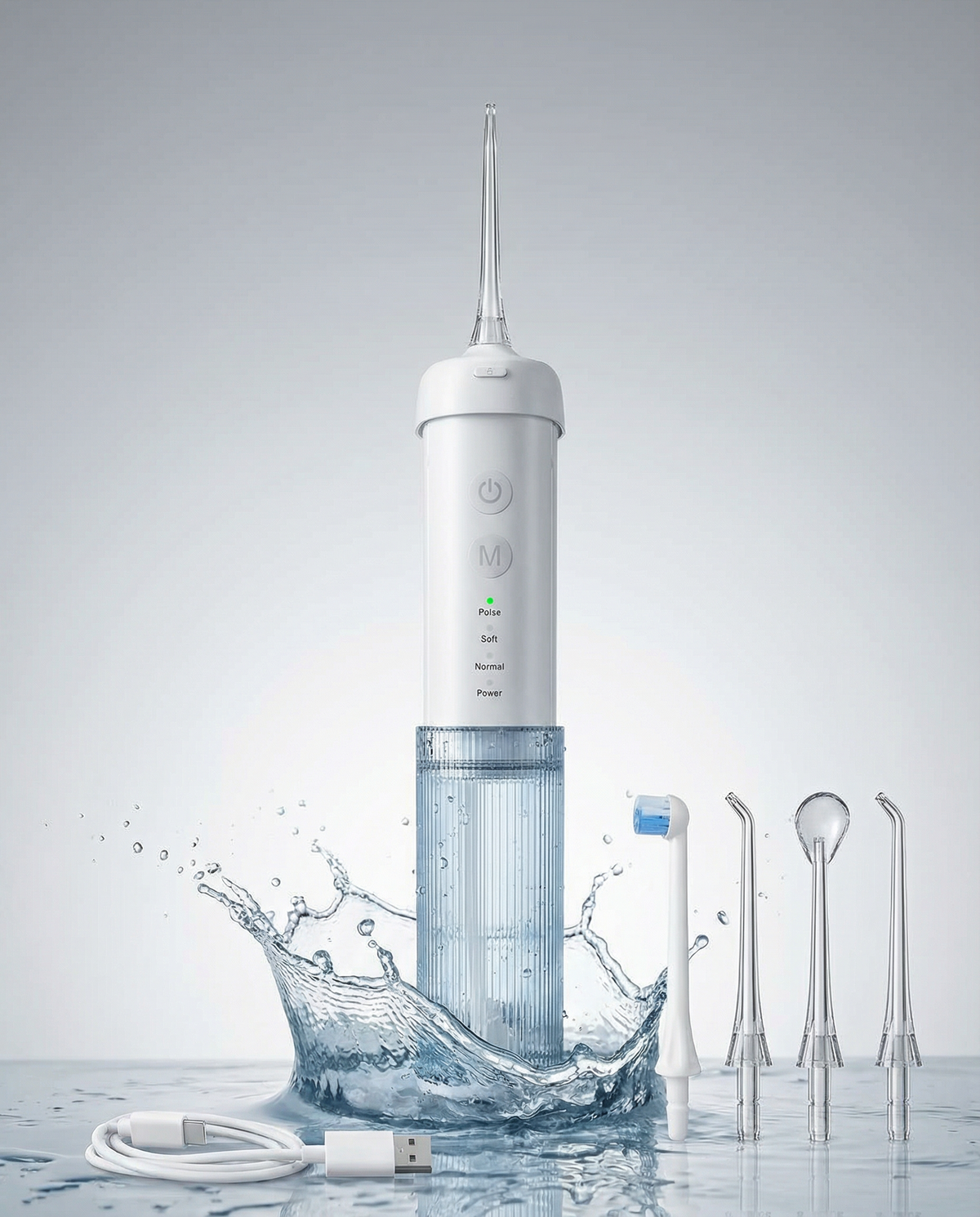
If you're looking for a high-performance water flosser that ticks every box, the White Wizard Mini Water Flosser is designed with your oral health in mind.
- 💧 1,400 pulses per minute for a deep, thorough clean
- 💧 120 PSI water pressure — powerful yet comfortable
- 💧 210ml collapsible water tank — compact and travel-friendly
- 💧 4 interchangeable 360° rotating nozzles for versatile cleaning
- 💧 USB-C rechargeable — no fussing with batteries
- 💧 IPX7 waterproof — fully safe for shower use
- 💧 Certified to CE, FCC, ROHS, PSE, and CB standards
With 11 five-star reviews and counting, customers across the UK are already making it a staple in their daily routine.
"Best purchase I've made for my teeth. My dentist even noticed the difference!"
How to Use a Water Flosser: Quick Tips
- Fill the tank with lukewarm water.
- Lean over the sink and place the nozzle in your mouth.
- Start on the lowest pressure setting and work your way up.
- Aim the tip at the gumline at a 90° angle and move slowly between each tooth.
- Use for 60–90 seconds daily for best results.
Ready to Upgrade Your Oral Care Routine?
Water flossing is one of the simplest upgrades you can make for your long-term dental health. Whether you're dealing with sensitive gums, braces, or just want a fresher, cleaner feeling every day — a quality water flosser makes a real difference.
👉 Shop the White Wizard Mini Water Flosser and take the first step towards a healthier smile today.

Leave a comment
This site is protected by hCaptcha and the hCaptcha Privacy Policy and Terms of Service apply.